Circular Packaging System for Indian E-commerce
A circular packaging system for Indian e-commerce that connects brands, customers, and recycling through reuse, rewards, and reverse logistics.
Circular Packaging System for Indian E-commerce
Circular Packaging System for Indian E-commerce
Circular Packaging System for Indian E-commerce
A circular packaging system for Indian e-commerce that connects brands, customers, and recycling through reuse, rewards, and reverse logistics.
A circular packaging system for Indian e-commerce that connects brands, customers, and recycling through reuse, rewards, and reverse logistics.
A circular packaging system for Indian e-commerce that connects brands, customers, and recycling through reuse, rewards, and reverse logistics.
ROLE
Systems Design
UX Design
TIMELINE
1 Week
ROLE
Systems Design
UX Designer
TIMELINE
1 Week
DOMAIN
Circular Economy
TEAM
Individual
DOMAIN
Circular Economy
TYPE
Individual Project
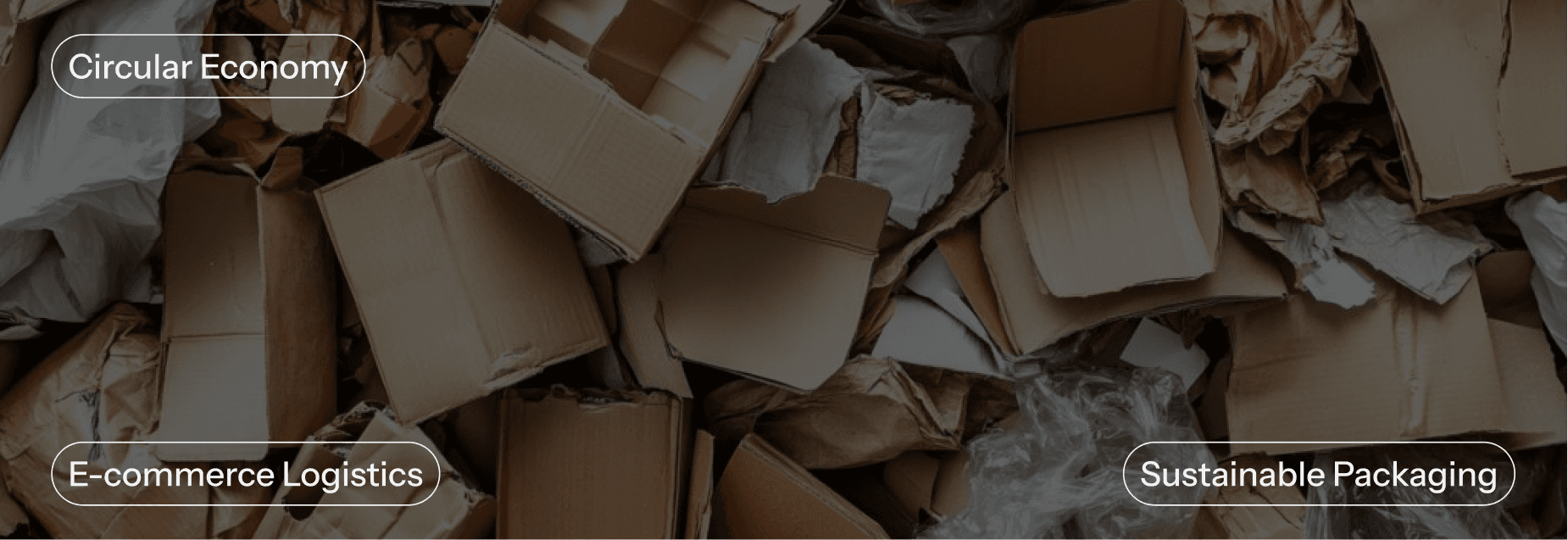
The Trouble with Today’s Packaging...
The Trouble with Today’s Packaging...
E-commerce packaging is designed to be used once and discarded.
E-commerce packaging is designed to be used once and discarded.

From Convenience to Waste
From Convenience to Waste
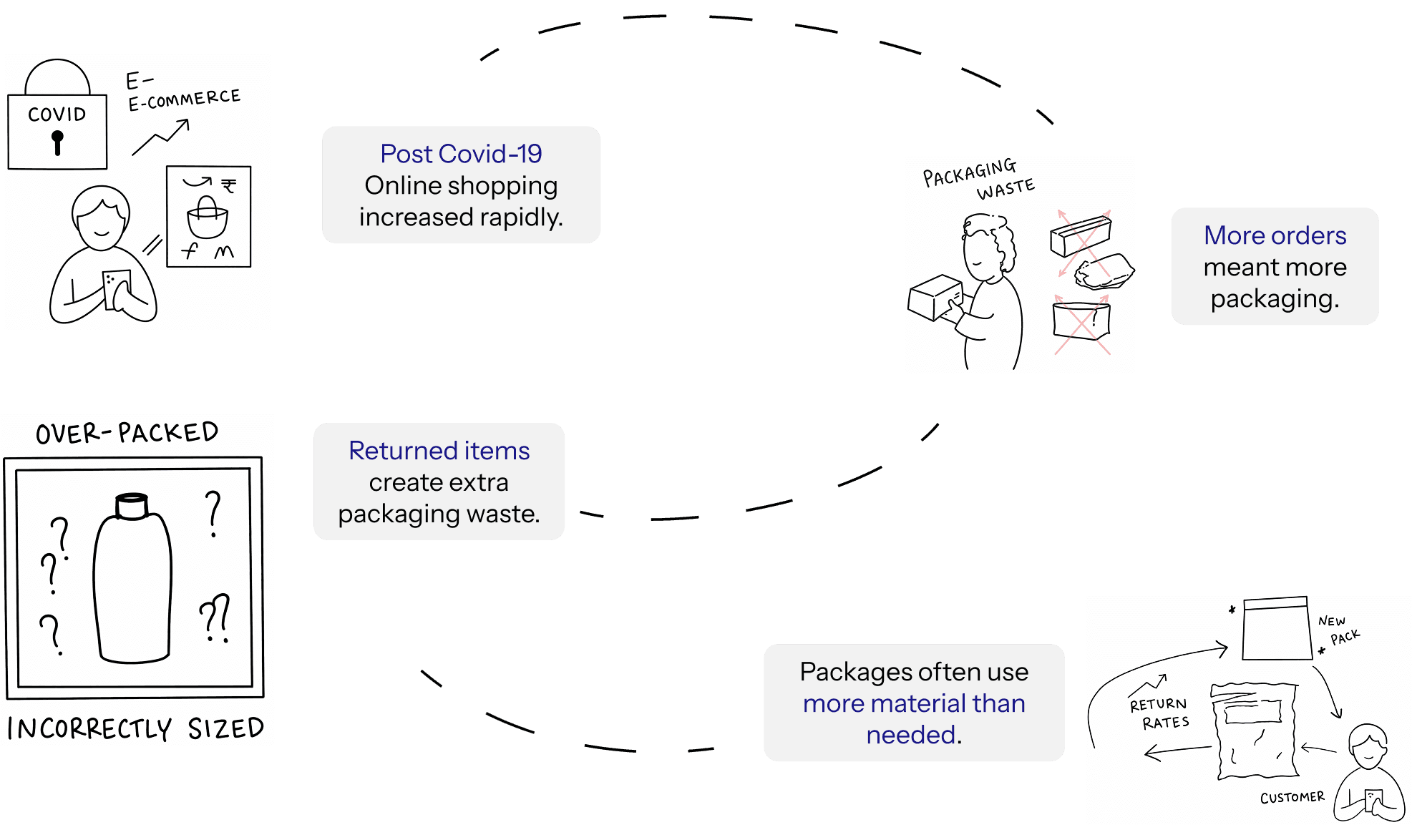
Have a Look…
Have a Look…
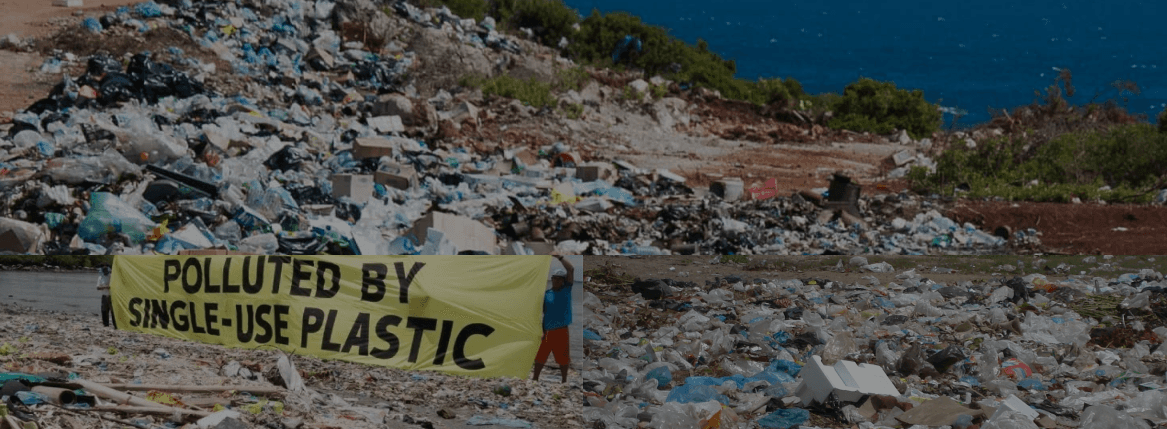
Single-use packaging everywhere
Made to be used once, then thrown away.
Used briefly, lasts forever
Disposed quickly, but remains in the environment for years.
Waste systems under pressure
Existing systems can’t keep up with the volume.
More landfills, more pollution
Poor disposal leads to environmental damage.
Why material choice alone isn't enough?
Why material choice alone isn't enough?
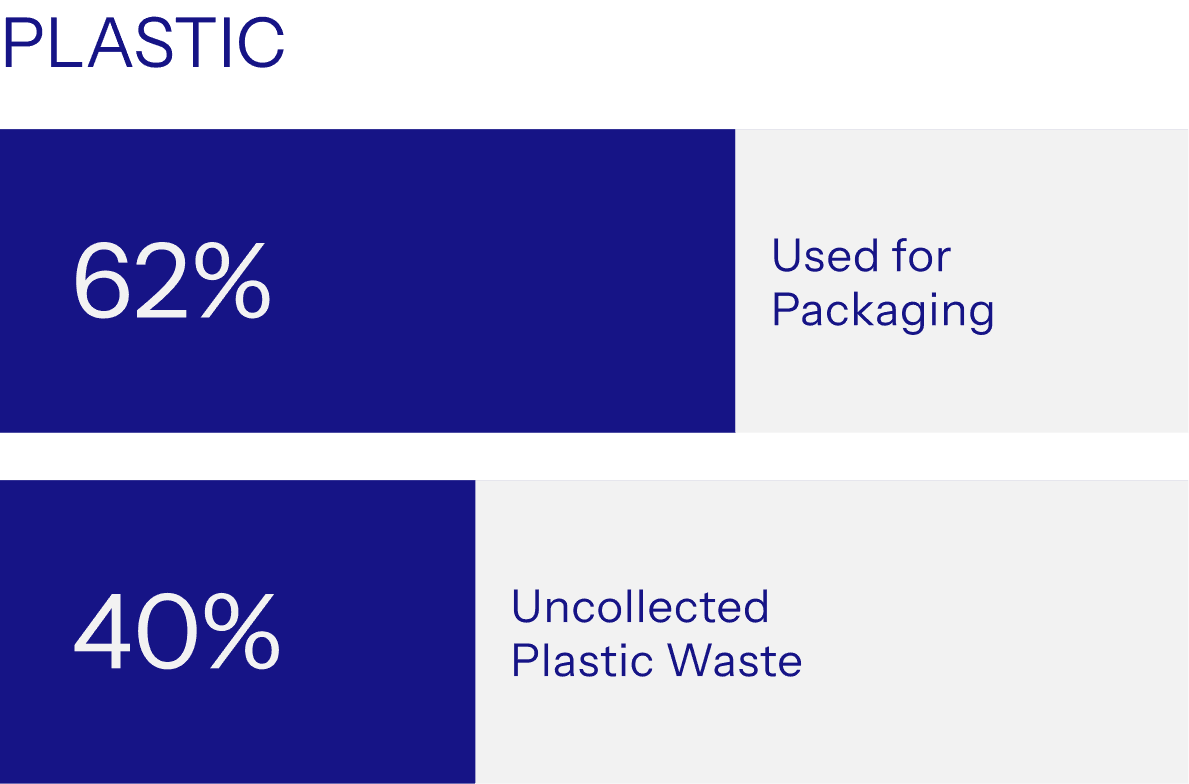
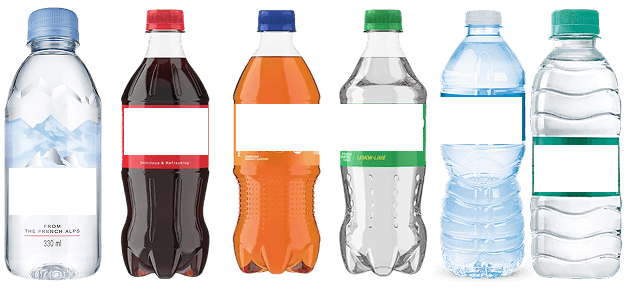
Most plastic bottles are recyclable, yet improper disposal means very few are actually recycled. In the end, Human Behaviour , not material alone, decides the impact.
Most plastic bottles are recyclable, yet improper disposal means very few are actually recycled. In the end, Human Behaviour , not material alone, decides the impact.
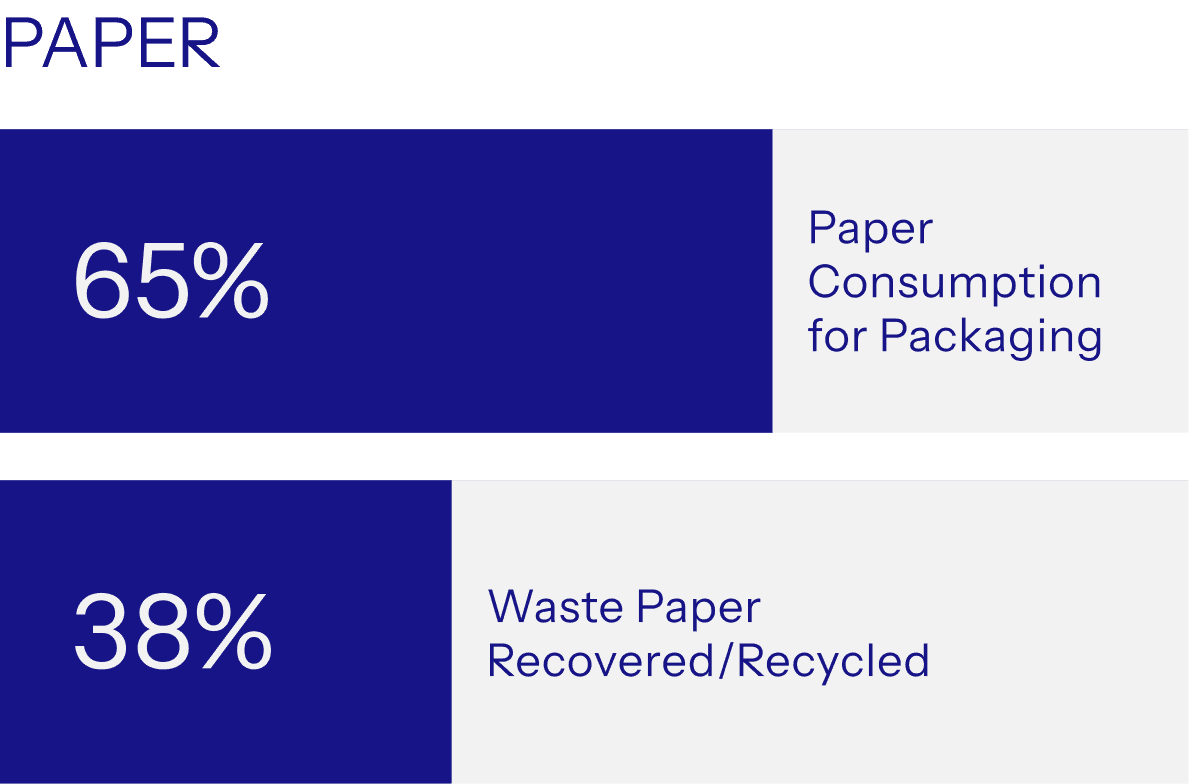
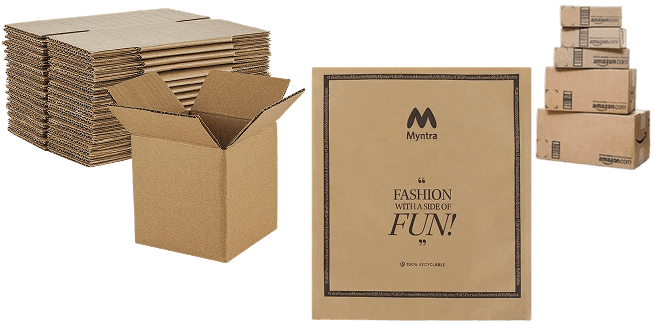
Paper packaging reduces plastic use but increases water energy and resource consumption , and can raise the carbon footprint if it depends on virgin pulp.
Paper packaging reduces plastic use but increases water energy and resource consumption , and can raise the carbon footprint if it depends on virgin pulp.
View Detailed Presentation
What’s Happening Today?
01.
Most e-commerce packaging is discarded immediately after delivery.
02.
Collection, contamination, and segregation issues keep recycling rates low.
03.
EPR regulations require recovery, but systems for take-back are weak.
04.
There is little incentive or mechanism for them to return packaging.
The Core Insight
The challenge is not designing recyclable packaging, but designing a system where packaging returns instead of becoming waste.
The challenge is not designing recyclable packaging, but designing a system where packaging returns instead of becoming waste.
Why the Current System Needs to Change?
Why the Current System Needs to Change?

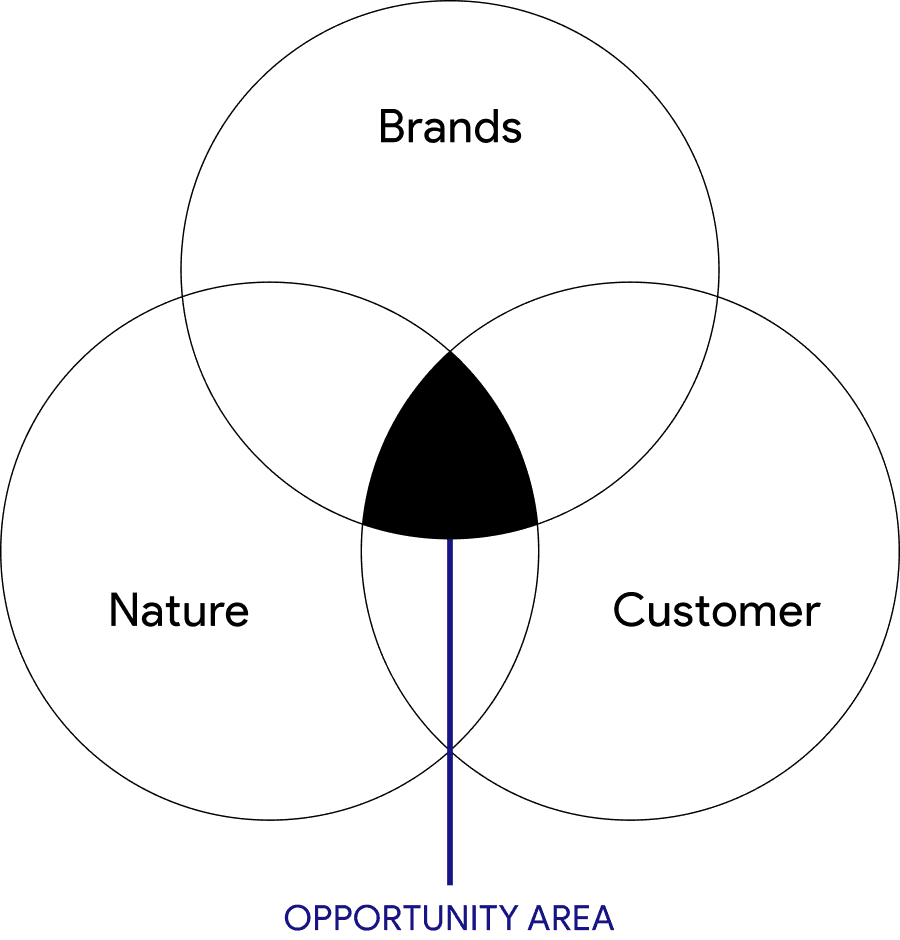
Brands Need It
Brands need scalable, compliant, and trackable packaging systems.
Sustainability targets
EPR pressure
Rising waste costs
Nature Need It
Plastic should circulate, not accumulate.
Plastic leakage
Resource depletion
Carbon emissions
Consumer Need It
Plastic should circulate, not accumulate.
Want to act sustainably
No easy participation
No rewards today
Brands Need It
Brands need scalable, compliant, and trackable packaging systems.
Sustainability targets
EPR pressure
Rising waste costs
Nature Need It
Plastic should circulate, not accumulate.
Plastic leakage
Resource depletion
Carbon emissions
Consumer Need It
Plastic should circulate, not accumulate.
Want to act sustainably
No easy participation
No rewards today
HOW MIGHT WE?
Rethink Single-Use Packaging
redesign e-commerce packaging so it can be reused instead of discarded after a single use?
Integrating Reverse Logistics
integrate reverse logistics into existing delivery networks to enable easy packaging returns?
Encourage Participation
encourage customers and brands to participate in a circular packaging system while meeting EPR requirements?
A circular packaging model that keeps e-commerce pouches in use, not in landfills.
A circular packaging model that keeps e-commerce pouches in use, not in landfills.
A closed-loop service integrated into existing e-commerce delivery and return networks, allowing each pouch to pass through multiple cycles of use, return, and recycling while retaining material value over time.
A closed-loop service integrated into existing e-commerce delivery and return networks, allowing each pouch to pass through multiple cycles of use, return, and recycling while retaining material value over time.
View Detailed System Breakdown
At a Glance
At a Glance
#1
Circular Pouch Manufacturing
Plastic film waste (LDPE/HDPE) is collected, cleaned, and recycled into durable, multi-use pouches designed for repeated delivery cycles.
#2
Brand Fulfilment & Customisation
Pouches are supplied to brands and e-commerce warehouses. Brand names, shipment labels, and QR-linked delivery information are printed at the fulfilment stage.
#3
Product Delivery to Customer
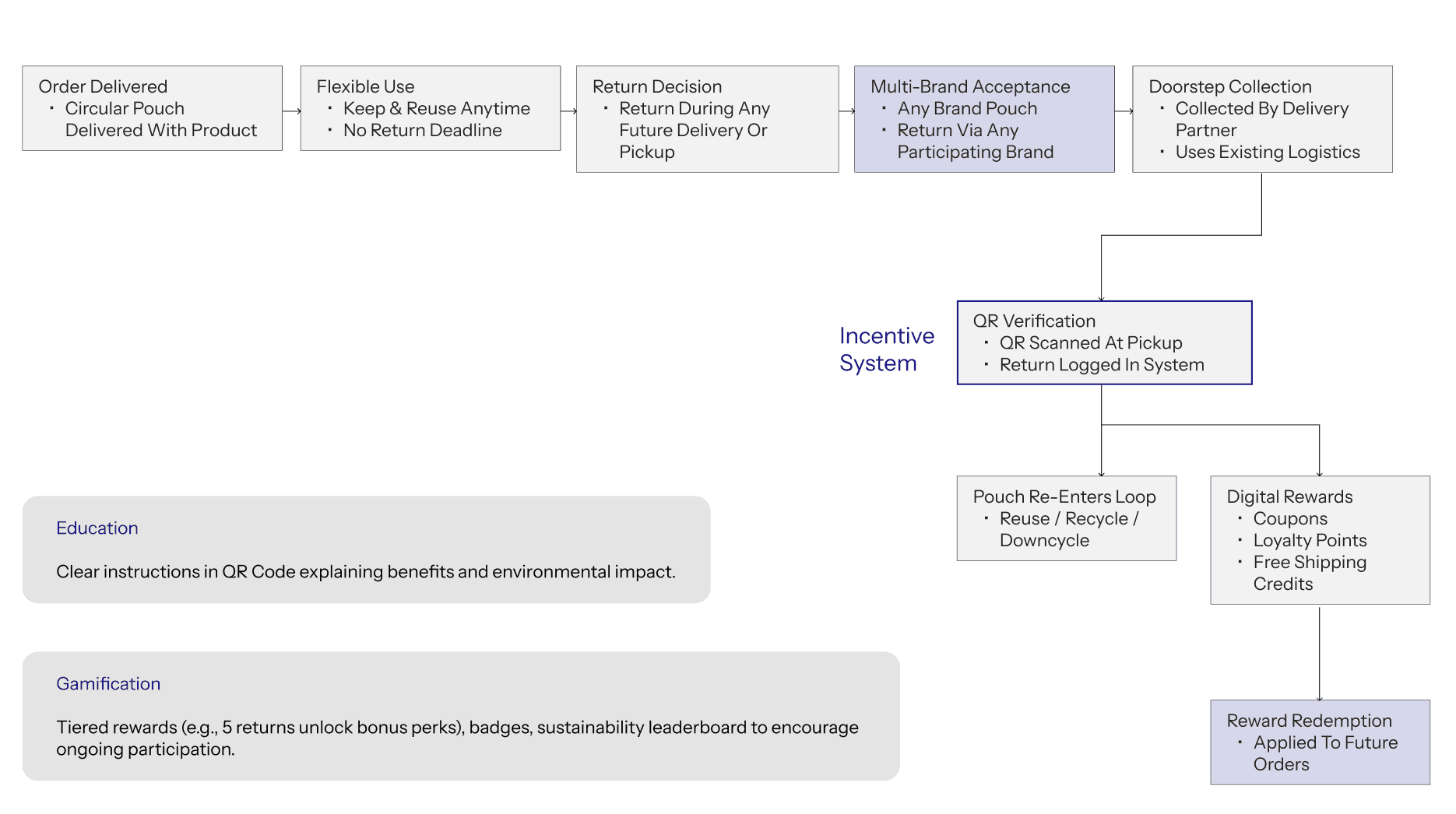
Products are delivered in reusable circular pouches. The QR code links the pouch to the order without changing the customer’s checkout experience.
#4
Customer Use & Optional Reuse
Customers can reuse the pouch for storage or returns for as long as they want, extending its life beyond delivery.
#5
Incentivised Return
When customers choose to return the pouch, it is collected during the next delivery or return pickup.
QR scanning confirms return and rewards the customer with discounts or loyalty points.
#6
Reverse Logistics & Sorting
Collected pouches are consolidated at brand warehouses (where applicable) and sent to processing facilities for inspection and sorting.
#7
Reuse, Recycling, or Downcycling
Reusable pouches are sanitised and reissued, end-of-life pouches are recycled into new film, and after 5–7 cycles the material is downcycled into small products like badges or tags to ensure continued positive use.
#1
Circular Pouch Manufacturing
Plastic film waste (LDPE/HDPE) is collected, cleaned, and recycled into durable, multi-use pouches designed for repeated delivery cycles.
#2
Brand Fulfilment & Customisation
Pouches are supplied to brands and e-commerce warehouses. Brand names, shipment labels, and QR-linked delivery information are printed at the fulfilment stage.
#3
Product Delivery to Customer
Products are delivered in reusable circular pouches. The QR code links the pouch to the order without changing the customer’s checkout experience.
#4
Customer Use & Optional Reuse
Customers can reuse the pouch for storage or returns for as long as they want, extending its life beyond delivery.
#5
Incentivised Return
When customers choose to return the pouch, it is collected during the next delivery or return pickup.
QR scanning confirms return and rewards the customer with discounts or loyalty points.
#6
Reverse Logistics & Sorting
Collected pouches are consolidated at brand warehouses (where applicable) and sent to processing facilities for inspection and sorting.
#7
Reuse, Recycling, or Downcycling
Reusable pouches are sanitised and reissued, end-of-life pouches are recycled into new film, and after 5–7 cycles the material is downcycled into small products like badges or tags to ensure continued positive use.
Primary Material
Primary Material
Polyethylene (PE)
Mainly LDPE (Low-Density Polyethylene) or HDPE (High-Density Polyethylene)
Polyethylene (PE)
Mainly LDPE (Low-Density Polyethylene) or HDPE (High-Density Polyethylene)
Strengthened and Enhanced
Color Additives
UV Protection
Printable Surface layer
Added strength enhancers
Color Additives
UV protection
Printable surface layer
Sustainability Value
Using recycled LDPE/HDPE reduces dependence on virgin plastic while keeping existing plastic waste in circulation. Each reuse cycle delays disposal and lowers overall material demand across the supply chain.
Sustainability Value
Using recycled LDPE/HDPE reduces dependence on virgin plastic while keeping existing plastic waste in circulation. Each reuse cycle delays disposal and lowers overall material demand across the supply chain.
Brand Integration and Customization
Brand Integration and Customization
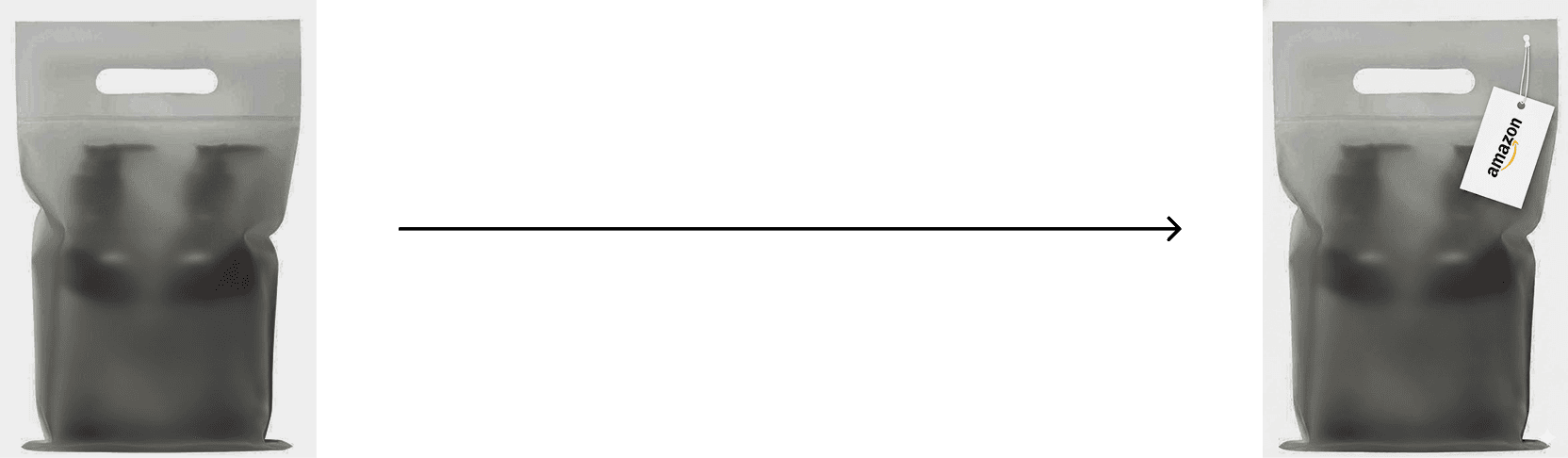
Brands receive plain pouches at fulfilment centres and print logos, labels, and order details during packing. A QR tag links each pouch to the order and return process without altering checkout.
Brands receive plain pouches at fulfilment centres and print logos, labels, and order details during packing. A QR tag links each pouch to the order and return process without altering checkout.
Value Proposition for brands
Marketing Opportunity
Enhances sustainability branding
EPR Compliance-as-a-Service
Value Proposition for brands
Marketing Opportunity
Enhances sustainability branding
EPR Compliance-as-a-Service
End-to-End Return & Collection Flow
End-to-End Return & Collection Flow
The system adapts to user behaviour, instead of forcing users to adapt to sustainability.
The system adapts to user behaviour, instead of forcing users to adapt to sustainability.
Blueprint and Touchpoint Design
Blueprint and Touchpoint Design
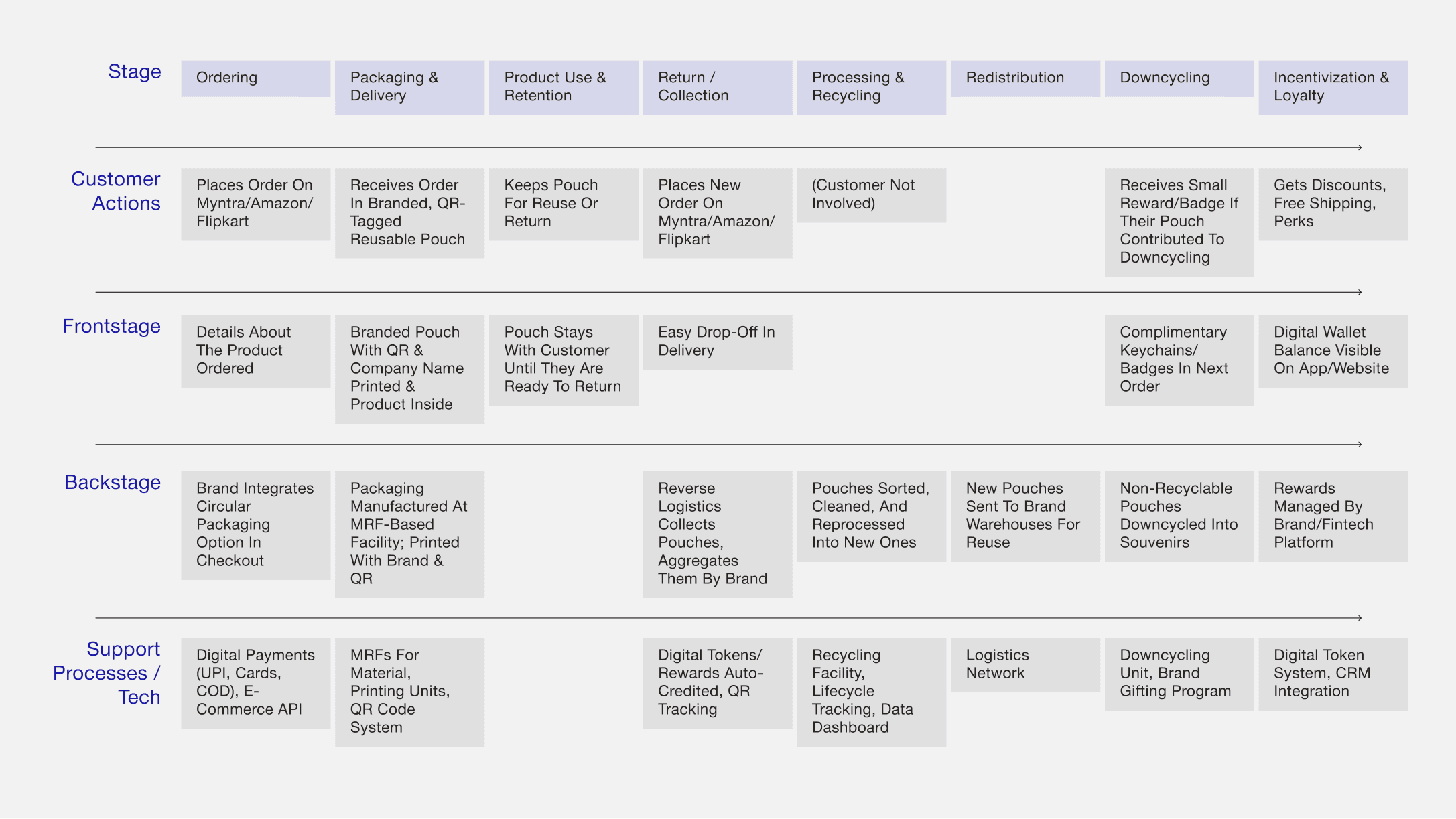
This service blueprint outlines the end-to-end journey of the circular packaging system, mapping customer interactions, frontstage services, backstage operations, and supporting technologies that enable reuse, reverse logistics, and incentives.
This service blueprint outlines the end-to-end journey of the circular packaging system, mapping customer interactions, frontstage services, backstage operations, and supporting technologies that enable reuse, reverse logistics, and incentives.
How the System Works on an E-Commerce Platform (Myntra)
How the System Works on an E-Commerce Platform (Myntra)
Why Myntra?
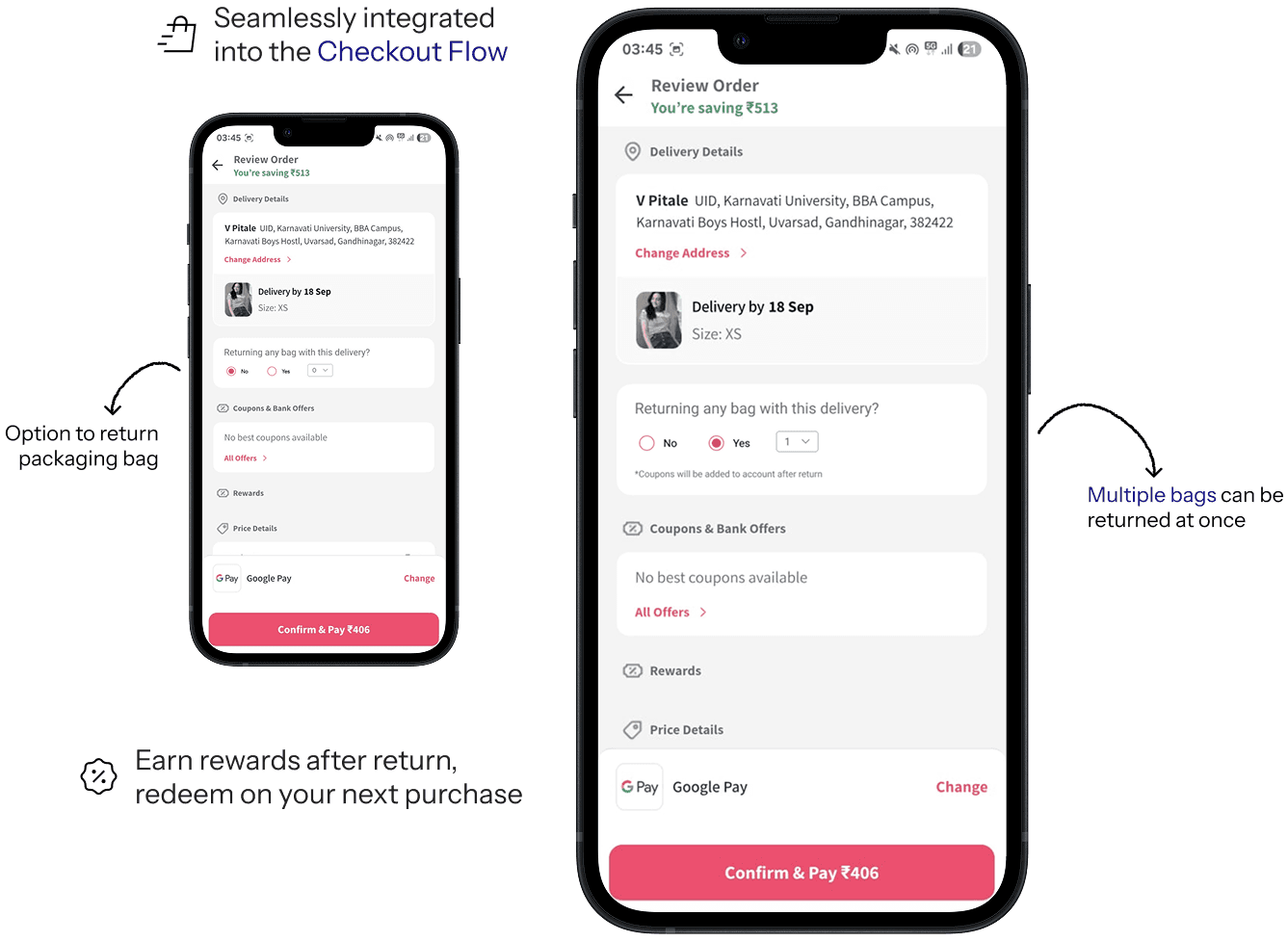
To demonstrate how this system works in practice, the feature is integrated into Myntra’s interface. Myntra was chosen for its strong user base and established logistics network, making it ideal to showcase scalability. However, the system is designed to be platform-agnostic and can be applied across other e-commerce platforms as well.
To demonstrate how this system works in practice, the feature is integrated into Myntra’s interface. Myntra was chosen for its strong user base and established logistics network, making it ideal to showcase scalability. However, the system is designed to be platform-agnostic and can be applied across other e-commerce platforms as well.
Impact
Materials in Circulation
Reduces single-use packaging waste
Lower Virgin Plastic
Enabled through reuse and recycling
Improved Return Rates
Through reverse logistics
Customer Participation
Driven by rewards and incentives
Move to Top
That's it for this project for now.
That's it for this project for now.
This project shifted my thinking from designing visuals to designing systems finding ways to embed sustainability into everyday practices without breaking what already works.
This project shifted my thinking from designing visuals to designing systems finding ways to embed sustainability into everyday practices without breaking what already works.
Check Out OTHER PROJECTS
Check Out OTHER PROJECTS